Stablecoin Settlement Next to Existing Banking
How to add stablecoin settlement beside an existing banking and payment stack, with explicit routing, compliance, reconciliation and acceptance controls.
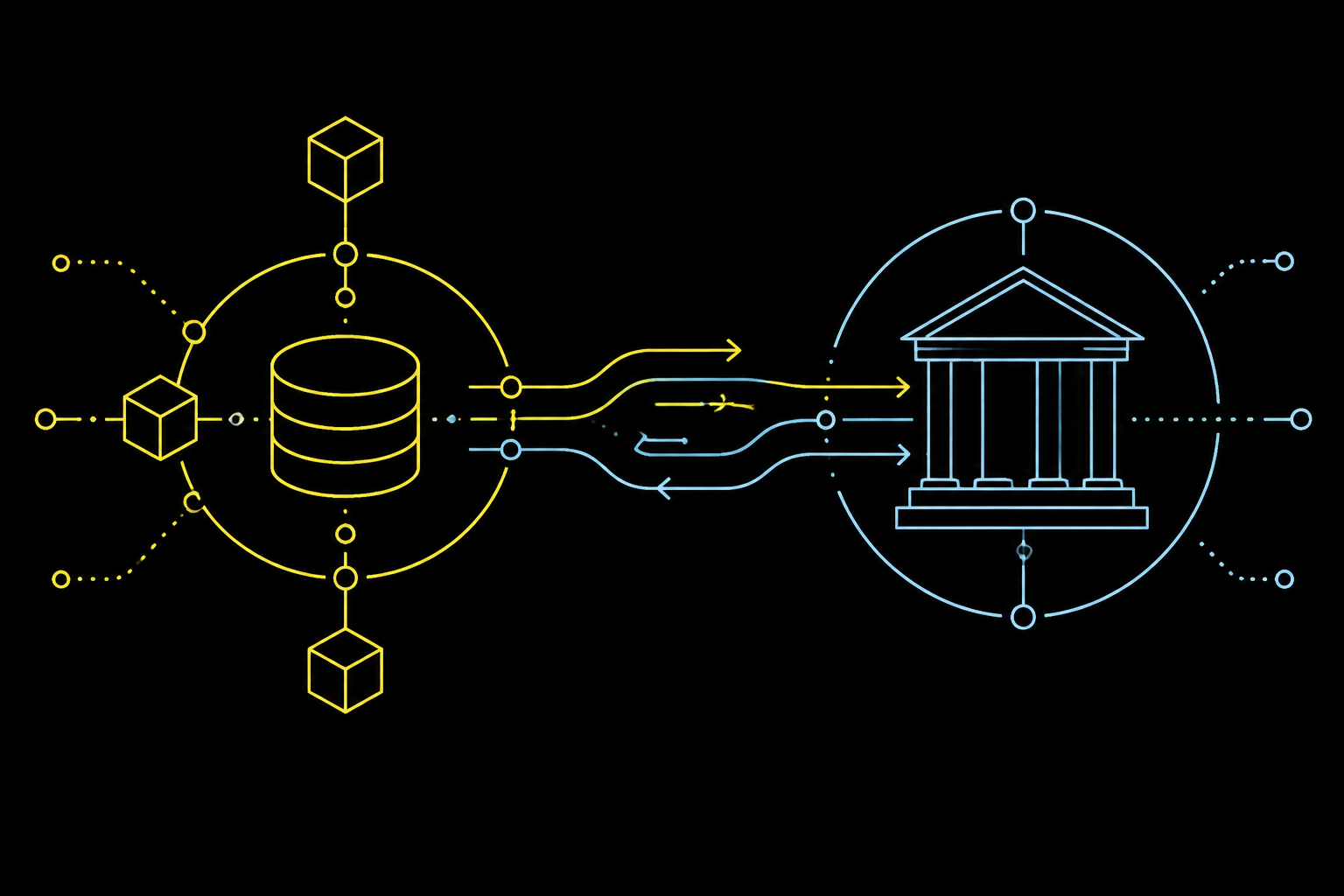
Draft for Oleg to approve. Stablecoin settlement can sit beside existing banking rather than replace it. The existing ledger and payment stack remain the operational system of record, while a separate settlement layer handles eligible routes, compliance checks, on-chain execution and reconciliation. The main engineering question is not chain connectivity; it is how money, status and exceptions move safely between both paths.
Proposed scope
A proposed Vareger scope would start with a discovery call, followed by a written scope with acceptance tests and one measured outcome. Unknowns—including transaction states, counterparties, custody model, compliance responsibilities, accounting rules and failure handling—must be confirmed during scoping.
The integration can be divided into five parts:
- Routing: decide when a payment stays on existing banking rails and when stablecoin settlement is eligible.
- Compliance orchestration: run the AML, KYC, sanctions and Travel Rule checks the client already requires; the client's compliance team keeps every decision.
- Execution: submit an approved transaction through the selected on-chain route, with fallback behaviour defined in advance.
- Accounting bridge: map on-chain events into the client’s ledger states without treating submission as final settlement.
- Reconciliation: compare instructions, ledger entries and on-chain results, then place mismatches into an exception queue.
Controls should cover duplicate submissions, delayed or failed transactions, inconsistent status updates, unavailable routes and manual recovery. Where automated rules or agents move money or make decisions, each receives a written mandate, spending limits, human approval above the limit and a full action log of inputs, sources, steps and results.
Acceptance and measurement choices
Draft acceptance tests would be written during scoping; they are not existing client tests. They could cover route selection, idempotency, compliance holds, ledger posting, reconciliation and recovery after an unavailable dependency.
One measured outcome should include the method, baseline, measured result, sample size and limits. Suitable choices include reconciliation exception rate, time spent resolving exceptions or the share of transactions requiring manual intervention. No result should be claimed without a defined observation period and comparable data.
The implementation framing is one quarter of milestones, followed by a measured result and handover. This is a planning boundary, not a promise of timing or outcome. Cost drivers include integration count, route complexity, ledger quality, compliance workflow depth, custody design and operational support requirements. See the stablecoin settlement integration scope for related engineering work.
Delivered evidence
Vareger has delivered a national-scale permissioned processing platform with regulator and institution validators, a fee engine, fiat-to-token conversion and regulatory reporting. Live transactions ran through the national payment network.
For a bank, Vareger also completed feasibility and design for a bank-backed stablecoin linked to a CBDC. Phase 1 was accepted, while Phase 2 remained subject to regulator sign-off. These are delivered references, not claims that the proposed architecture above has already been implemented for another client.
Writes for Vareger.
More about the Vareger Group team